

A Silent Killer Stalking Teenage Girls: UNISA Yogyakarta Team Visits Dormitories in Sleman
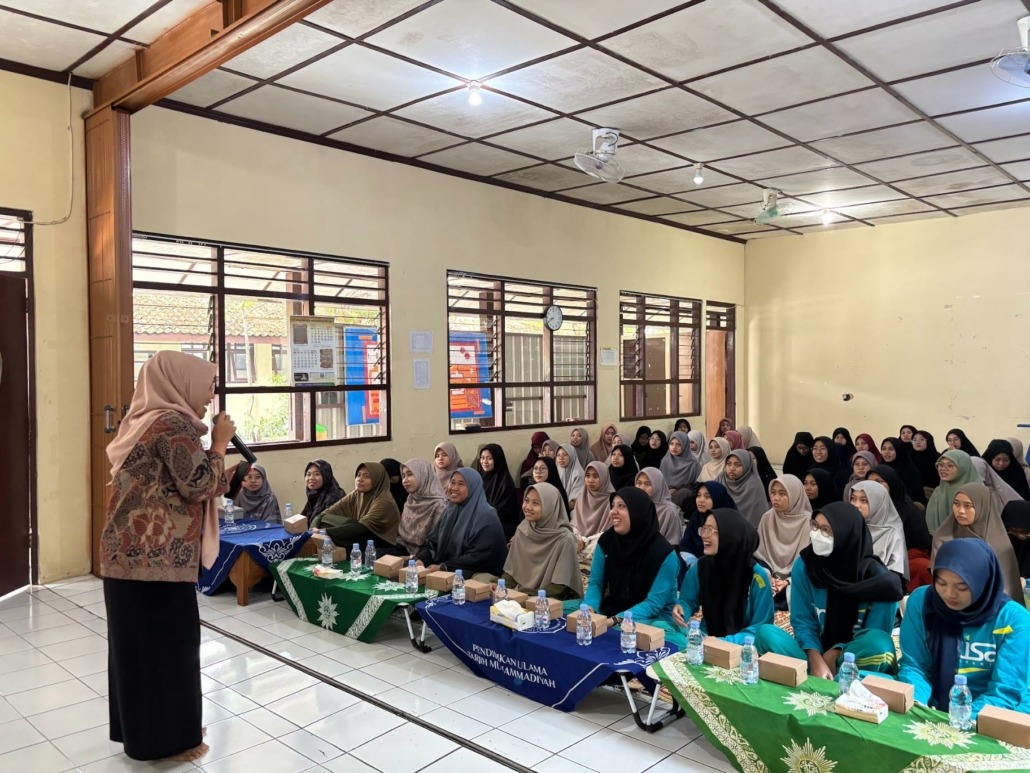
The threat of the “silent killer”—hypertension—no longer looms only over the elderly. Data from the 2018 Riskesdas survey shows that approximately 8.3% of Indonesian adolescents aged 15–17 already suffer from it. In response to this urgent situation, a community service team from ‘Aisyiyah University (UNISA) Yogyakarta visited the PUTM (Muhammadiyah Regional Leadership Women’s Student Dormitory) in Sleman, Yogyakarta, on Friday (10/24/25).
This health team from the UNISA Yogyakarta Physical Therapy program conducted a community service initiative focused on health promotion and screening. The goal was to improve health literacy among teenage girls to help them avoid hypertension from an early age.
The event featured presenter Indriani, SKM., MSc, along with a health team led by Veni Fatmawati, M.Fis, and five Physical Therapy students. They provided direct promotive and preventive education. Beyond theoretical instruction, the teenage girls at the dormitory underwent individual health checks, including blood pressure measurements, weight assessments, and body mass index (BMI) calculations.
Ustadz Asep Rahmat Fahzi, S.Th.i, M.Pd., representing the PUTM leadership, warmly welcomed this initiative. He appreciated the collaboration, particularly in improving the health literacy of the female students.
The Dangers of the “Silent Killer” in Adolescent Girls
The focus on adolescent girls is not without reason. Essential hypertension in adolescents often goes unnoticed because the symptoms are minimal, yet it can persist into adulthood and carries a higher risk of mortality.
“This condition is called a ‘silent killer’ because it can lead to serious health complications such as heart disease, stroke, and even kidney failure later in life if left unchecked,” Indriani explained in her presentation.
She added, “Especially for teenage girls, this increases the risk of hypertension and diabetes during pregnancy, which are extremely dangerous for the health of both mother and child.”
The risk factors are diverse, ranging from genetics, unhealthy lifestyles, lack of physical activity, excessive salt intake, obesity, to stress.
“It is important to have your blood pressure checked regularly, engage in physical activity, follow a healthy, low-salt diet, and manage stress. If symptoms have already appeared, see a doctor immediately,” Indriani emphasized.
This health screening is expected to provide a clear picture of participants’ health status and motivate them to adopt a healthy lifestyle.












Leave a Reply
Want to join the discussionFeel free to contribute!