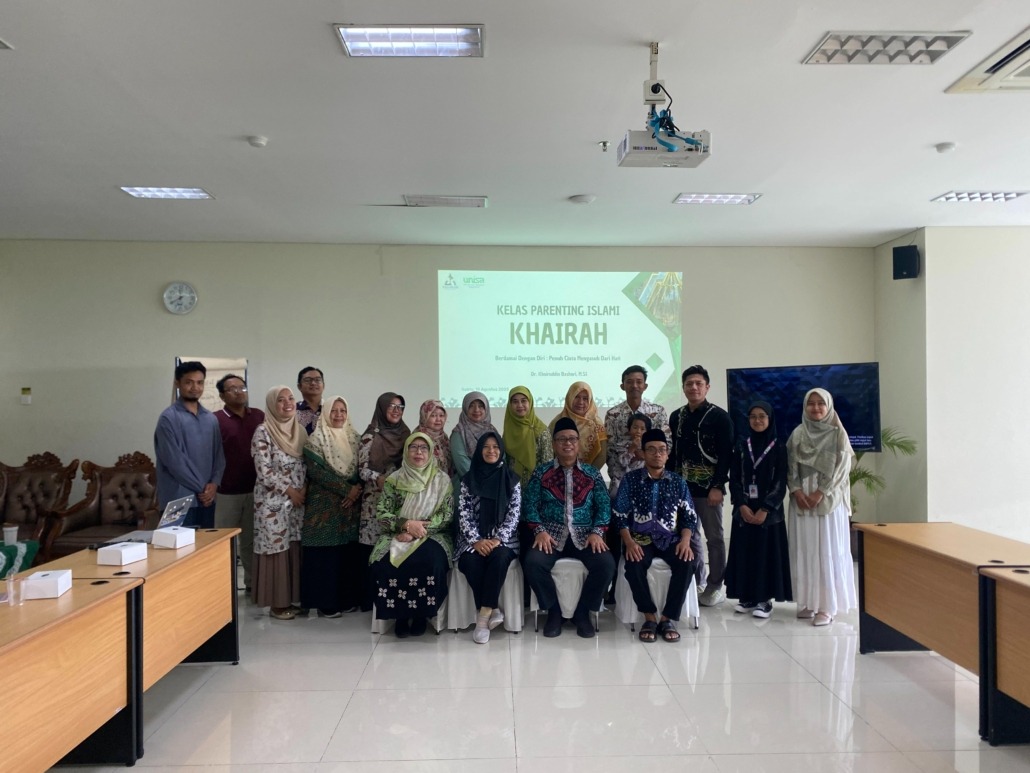
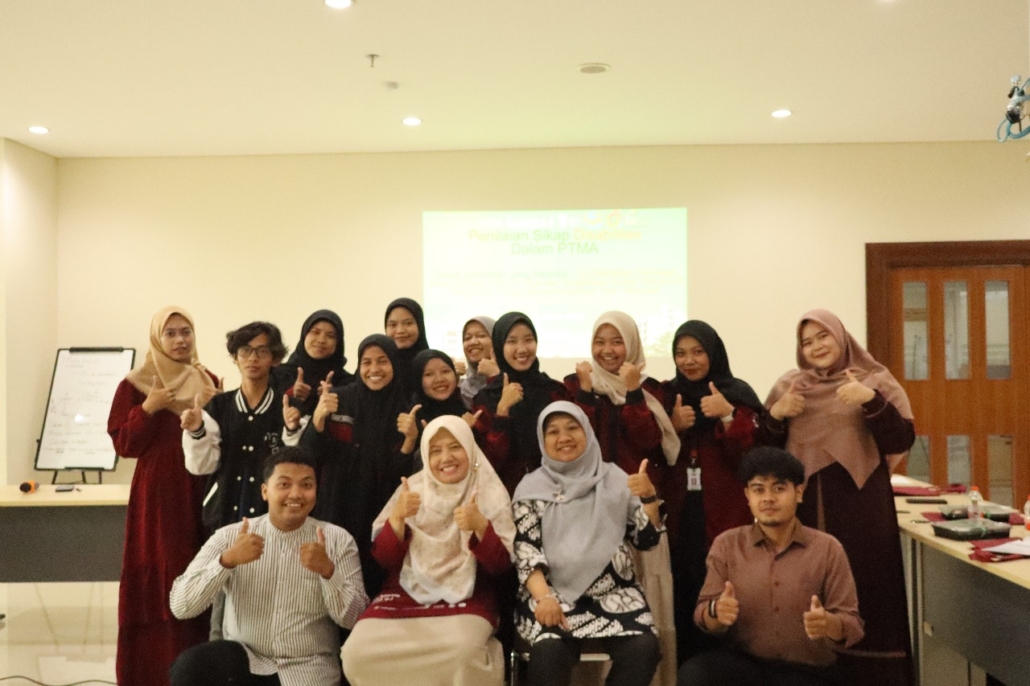
The Walidah Dahlan Mosque at Universitas ‘Aisyiyah (UNISA) Yogyakarta successfully held an inspirational parenting class that was different from the usual ones. Through the Khairah program (Balance of Heart, Faith, and Mind), this mosque raised the important theme of “Making Peace with Yourself: Nurturing with Love from the Heart” on August 16, 2025.
The event, which was opened by the Vice Rector 3 of UNISA Yogyakarta, Prof. Dr. Mufdlillah, S.Pd., S.ST., M.Sc., emphasized that the key to good parenting begins with the mental health of the parents themselves. By presenting an expert speaker, Dr. Khoiruddin Bashori, M.Si., participants were encouraged to first make peace with themselves before educating their children.
Unlike conventional parenting classes, this session did not solely focus on the technical aspects of child-rearing. Participants, comprising UNISA Yogyakarta staff and the general public, were instead equipped with skills to enhance self-awareness, manage emotions, and apply mental health principles within families and social environments. The classroom atmosphere was warm and practical, allowing everyone to engage in discussions and hands-on practice.
“The material presented was excellent, interesting, and practical. I feel like I learned a lot today about controlling myself, managing my emotions, and maintaining my mental health,” said Haidir, one of the participants.
This program, with the tagline “Strong in faith, calm in spirit,” demonstrates the broader role of mosques, not only as centers of worship but also as spaces for holistic education. The initiative by Masjid Walidah Dahlan is a concrete step toward building families filled with love and mental well-being.
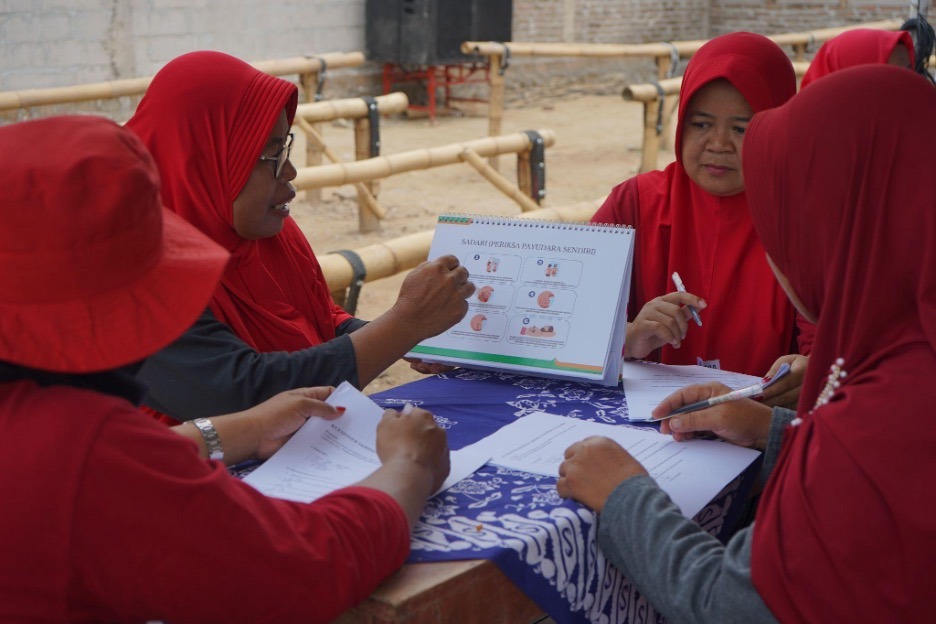
The Community Empowerment Partnership Team (PKM) from Aisyiyah University (Unisa) Yogyakarta successfully implemented a community service program in Dukuh Jagulan, Pedan District, Klaten, Central Java. The program, titled “Establishment of PONCEL PEKANRAYA (Breast Cancer Prevention Counseling Center) for the PKK Sidomakmur Women’s Group in Jagulan Hamlet in 2025,”
The team that initiated this program consisted of lecturers and students from the Nursing and Communication Science Study Programs. This activity was the result of a grant from the Ministry of Higher Education, Science, and Technology (Kemendiktisaintek) from Sunday (7/27/2025) to Sunday (8/31/2025).
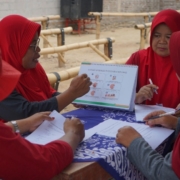
This PKM program includes various training sessions. For example, breast cancer prevention training is conducted by Dwi Sri Handayani, S.Kep., Ns., M.Kep and Diah Nur Anisa, S.Kep. Ns. M.Kep. This activity targets teenagers, PKK mothers’ groups, and male cadres.
The program aims to prepare cadres who understand breast cancer risk screening and healthy lifestyle counseling for breast cancer prevention. The training also includes demonstrations of breast cancer prevention techniques, such as self-breast examination (SADARI). Cadres are expected to independently assist in screening and counseling on breast cancer risks in their communities.
After that, the team then built the PONCEL PEKAN RAYA room. This room became the center for screening and counseling on breast cancer prevention for a group of mothers in the hamlet of Jagulan. With the presence of PONCEL PEKAN RAYA, it is hoped that 100% of mothers in the hamlet of Jagulan will be screened for breast cancer risk.
In addition, the PKM Unisa Yogyakarta team also provided training on marketing salted eggs through online shops to salted egg entrepreneurs and mothers in the hamlet of Jagulan. This training was conducted by Hari Akbar Sugiantoro S.I.Kom., M.A. Through this training, the mothers and salted egg entrepreneurs in the hamlet of Jagulan were guided on how to set up and operate online shops for marketing salted eggs.
Not only that, this PKM also provided training on ecoprint batik production. In this session, participants consisting of PKK women were taught to independently create innovative batik fabrics by utilizing natural pigments and shapes from plants, such as leaves, flowers, or stems, which were transferred to the fabric using processes such as boiling, steaming, or pounding.
As a closing and farewell event, the Unisa Yogyakarta PKM team was invited to participate in the local village’s Agustusan carnival celebration. At this event, the Unisa Yogyakarta PKM team showcased their health team. During the same event, the women participants from the PKK Sidomakmur Jagulan hamlet also joined in, wearing the ecoprint batik fabric they had produced independently.
The head of the PKK Sidomakmur in Jagulan hamlet, Simisri Lestari, admitted that she and her friends were very happy with the health and economic training from Unisa Yogyakarta. “During the training, I gained a lot of knowledge that is very useful for me and the PKK mothers in Jagulan hamlet. Hopefully, the PKK mothers can apply the knowledge they have gained through the partnership with Unisa Yogyakarta,” said Simisri Lestari.
Meanwhile, the head of PKM Unisa Yogyakarta, Dwi Sri Handayani, S.Kep., Ns., M.Kep, hoped that this community service program would be beneficial, especially for the residents of Jagulan hamlet, in improving their health and preventing breast cancer, as well as improving their economic welfare. Additionally, the lecturer, affectionately known as Dwi, noted that this community service program is also beneficial for students as it allows them to apply the knowledge they have learned in the classroom directly.
“We would like to express our gratitude to the Jagulan hamlet, especially the PKK Sidomakmur mothers who have kindly agreed to be partners in this program. We would also like to thank the Ministry of Education, Culture, Research, and Technology for providing a grant for the implementation of this community service program,” said Dwi.
https://www.unisayogya.ac.id/en/wp-content/uploads/sites/16/2025/11/image-1.jpeg624936adminhttps://media.unisayogya.ac.id/wp-content/uploads/2024/01/Logo-Unisa_Horisontal_bg_putih.pngadmin2025-11-03 14:48:542025-11-03 14:48:56UNISA Yogyakarta Empowers Residents Through Health and Creative Economy Training
Students participating in the Community Service Program (KKN) from Universitas ‘Aisyiyah (UNISA) Yogyakarta brought practical solutions to combat stunting in Gunung Kidul. Through an empowerment program at the Siyono Kulon Health Center, Group 13 of the KKN held a workshop on making nutritious, delicious, and affordable complementary foods for infants.
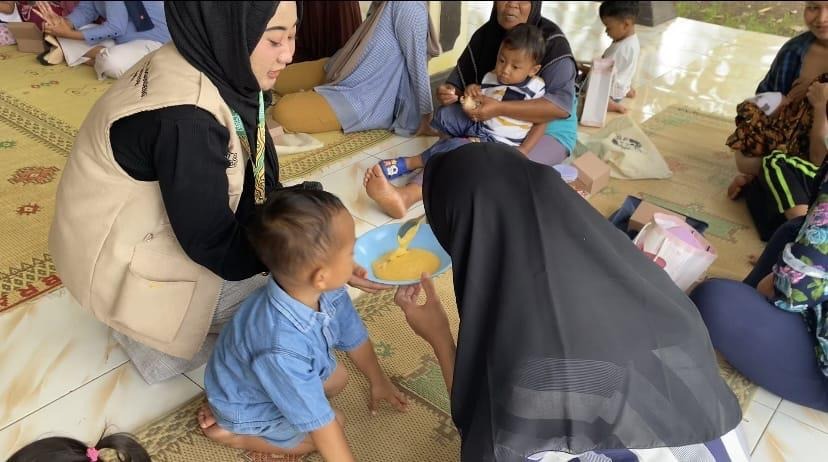
This activity aims to improve mothers’ skills in preparing healthy food for their children. The students showed that nutritious food does not have to be expensive. By utilizing local food ingredients such as potatoes, tempeh, chicken liver, and vegetables, the mothers were invited to cook MP-ASI tailored to various stages of their children’s ages, ranging from 6 to 24 months.
“We want to help mothers feel more confident in preparing complementary foods by utilizing simple, inexpensive local food ingredients that still meet children’s nutritional needs,” said Gema, leader of UNISA Yogyakarta’s 13th KKN group.
In addition to cooking practice, the students also provided comprehensive guidance, from ingredient selection, proper processing techniques, to attractive presentation methods to encourage children to eat heartily. The participants appeared enthusiastic and actively asked questions, proving that such education is greatly needed.
“I used to be confused about what to feed my children, but after this practice, I understand better. It turns out that everyday ingredients can be processed into nutritious food,” said Murti, one of the participants.
Field Supervisor (DPL) Niken Anggraini, M.Tr.Kep, appreciated this initiative as a tangible form of synergy between the campus and the community. According to her, this program not only has a direct impact on preventing stunting but also trains students to become agents of change within the community. With this knowledge, mothers in Siyono Kulon are expected to become more independent and creative in meeting their children’s nutritional needs.
https://www.unisayogya.ac.id/en/wp-content/uploads/sites/16/2025/11/image.jpeg462828adminhttps://media.unisayogya.ac.id/wp-content/uploads/2024/01/Logo-Unisa_Horisontal_bg_putih.pngadmin2025-11-03 14:37:242025-11-03 14:37:26UNISA Yogyakarta Community Service Students Encourage Mothers in Gunung Kidul to Make Foolproof Complementary Foods
Universitas Aisyiyah (UNISA) Yogyakarta has once again demonstrated its commitment to creating an inclusive campus environment that is fair and open to all. Through collaboration between lecturers and students, UNISA Yogyakarta held a training session entitled “Testing the Effectiveness of Gender Disability Social Inclusion (GEDSI) Assessment” on Thursday (August 28, 2025).
This activity specifically targeted future leaders, namely 14 cadres from the Muhammadiyah Student Association (IMM) from three commissariats representing the Faculty of Health Sciences (FIKES), the Faculty of Medicine (FK), the Faculty of Economics, Social Sciences and Humanities (FEISHum), and the Faculty of Science and Technology (FST). The aim was to equip IMM cadres as extensions of the association to understand and advocate for issues of gender equality, disability rights, and inclusive social culture.
The training opened with an enlightening session led by Dr. Siti Khotimah, SST., Ft., M.Fis. She emphasized that disability is not merely a medical issue, but a social phenomenon.
“IMM, as a student organization, is trusted to spread the values of tolerance and equality, and must be able to support students with disabilities so that they are more confident in voicing their needs,” explained Khotim.
The next session was led by Dr. Islamiyatur Rokhmah, M.S.I., who thoroughly explored the fundamental differences between sex (biological) and gender (social construct). She also discussed various forms of gender inequality and practical strategies for creating a culture of inclusion in the surrounding environment.
To test their understanding, participants not only took pre-tests and post-tests, but also actively participated in Focus Group Discussions (FGDs). In these group discussions, cadres interactively discussed real case studies on gender and social inclusion issues. This activity is expected to be the first step in creating agents of change who are ready to build a more welcoming and equitable UNISA Yogyakarta campus for all.
https://www.unisayogya.ac.id/en/wp-content/uploads/sites/16/2025/11/Screenshot-2025-11-03-142010.png423637adminhttps://media.unisayogya.ac.id/wp-content/uploads/2024/01/Logo-Unisa_Horisontal_bg_putih.pngadmin2025-11-03 14:20:242025-11-03 14:20:27UNISA Yogyakarta Realizes an Inclusive Campus Through GEDSI Training
Exciting news comes from the academic community in Yogyakarta. The Student Executive Board (BEM) of the University of `Aisyiyah (UNISA) Yogyakarta has achieved a remarkable feat by being selected as one of the recipients of funding in the prestigious “Impactful Students: Community Empowerment by the Student Executive Board” program for the 2025 fiscal year.
This program is organized by the Ministry of Higher Education, Science, and Technology (Kemdiktisaintek). This confirmation is outlined in the official decision letter from the Directorate General of Research and Development, released on September 7, 2025.
The innovation proposed by BEM KM UNISA Yogyakarta is a program titled “SI-LEMPENG: Synergy of Independent Catfish and Nutritious Food for Stunting Prevention in Logandeng Village.” The program, chaired by Bdn. Yekti Satriyandari, S.ST., M.Kes., is designed as a concrete solution to empower the community through nutritional intervention and strengthening local food security.
The Student President of BEM KM UNISA Yogyakarta, Lukmannul Hakim, welcomed this good news with gratitude and a sense of responsibility. According to him, this achievement is proof of Kemdiktisaintek’s trust in the capacity of students to create change.
“This achievement is not just an award, but a huge responsibility to bring about real change in society. Our team will work collaboratively with residents, the university, and local partners to ensure that SI-LEMPENG has an impact on preventing stunting and improving access to nutritious food,” said Lukman.
Full support also came from the university. Yekti Satriyandari, who also serves as Head of the Student Affairs Bureau at UNISA Yogyakarta, emphasized the institution’s readiness to oversee the program’s implementation.
“The university provides full support, from academic assistance to technical report preparation. We will ensure that all reporting mechanisms comply with regulations and prioritize the involvement of lecturers and the community as an integral part of the program,” said Yekti.
This success paves the way for UNISA Yogyakarta students to apply their knowledge directly. The SI-LEMPENG program is expected not only to effectively reduce stunting rates in Logandeng but also to serve as an inspiring model of collaboration between the university and the community that can be replicated in other regions.
https://www.unisayogya.ac.id/en/wp-content/uploads/sites/16/2025/10/image-11.jpeg977989adminhttps://media.unisayogya.ac.id/wp-content/uploads/2024/01/Logo-Unisa_Horisontal_bg_putih.pngadmin2025-10-29 17:39:232025-10-29 17:39:25UNISA Yogyakarta Student Executive Board Receives Funding from the Ministry of Research, Technology, and Higher Education to Address Stunting in Logandeng