Information for all students of Universitas `Aisyiyah (UNISA) Yogyakarta, regarding all learning and academic activities at the UNISA Yogyakarta campus in response to the socio-political situation and the wave of demonstrations in Yogyakarta and various other regions.
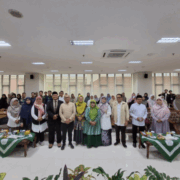
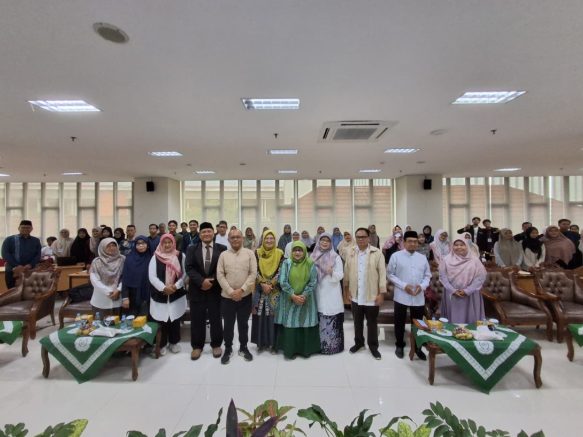
Universitas ‘Aisyiyah (UNISA) Yogyakarta hosted the Training for Musyrif and Musyrifah of Muhammadiyah–’Aisyiyah (PTMA) University Dormitories throughout Indonesia. The event, organized by the PTMA Dormitory Management Association (ASLAMA), took place from August 29 to 31, 2025, in the Siti Moendjijah Building Meeting Room.
In her opening remarks, UNISA Yogyakarta Rector Dr. Warsiti, S.Kp., M.Kep., Sp.Mat, said that this event was a forum for collaboration, synergy, and friendship to improve the capacity of musyrif and musyrifah.
“This dormitory is like Condrodimuko, a place to nurture Muhammadiyah ‘Aisyiyah cadres in the development of Islamic, excellent, and progressive human resources,” said Warsiti.
The Chairperson of ASLAMA PTMA, Dr. Wawan Kusnawan, S.S., M.Pd.I., explained that student dormitories should not only function as a place to live, but must also be a strategic means for producing excellent cadres.
“To date, more than 56 PTMA across Indonesia have dormitories or ma’had,” said Wawan, highlighting the rapid development of these facilities.
With the theme “The Strategic Role of ASLAMA in Improving the Quality of Musyrif-Musyrifah and Muhammadiyah Cadres in the Current Era,” this training was attended by 243 participants online. The event featured various speakers from the Muhammadiyah Central Leadership Council for Research and Development, as well as leaders from each PTMA.
This training not only served as a platform for knowledge exchange but also strengthened the network among Musyrif and Musyrifah, ensuring that student dormitories within PTMA can function optimally in nurturing young generations with strong character and readiness to become future leaders.
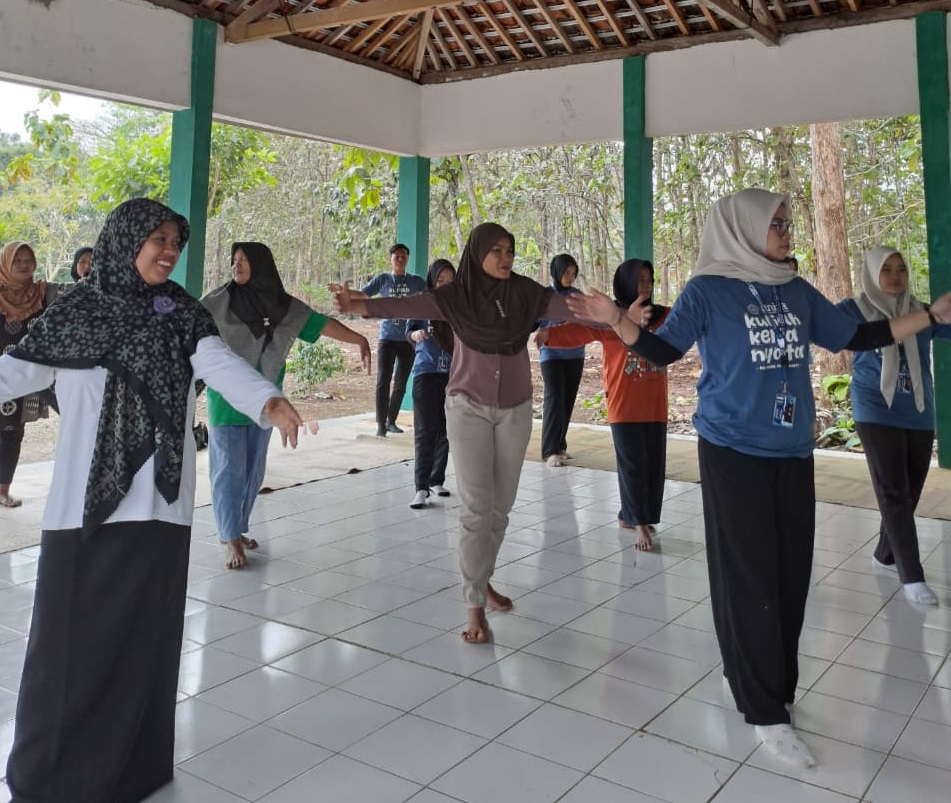
Students from the Community Service Program (KKN) at Universitas ‘Aisyiyah (UNISA) Yogyakarta Group 12 held a very beneficial activity for the elderly community. Located in Dukuh Logandeng, Playen, Gunungkidul, they organized elderly gymnastics combined with free health check-ups on Friday (August 15, 2025).
Since early morning, dozens of elderly people had gathered at the Logandeng Village Hall with great enthusiasm. They followed each exercise movement guided by cheerful music, creating a lively and communal atmosphere.
“This exercise makes my body feel fresher, and I can gather with friends of the same age,” said Mbah Surti (68), one of the participants who regularly attends this activity.
In addition to the exercise session, the event also included free health check-ups, such as blood sugar tests and blood pressure measurements. These examinations were conducted by health students and supervised by medical staff from the local health center. The results were immediately provided to the participants, followed by an educational session on hypertension to help them better understand how to maintain a healthy lifestyle.
The Head of Logandeng Village, Husein, expressed his appreciation. “We are greatly assisted by the activities organized by the UNISA Yogyakarta KKN students. We hope that such positive activities can continue in our village in the future,” said Husein.
Field Supervisor (DPL) of UNISA Yogyakarta’s Community Service Program, Niken Anggraini, M.Tr.Kep, emphasized that this program is a tangible manifestation of student service to the community.
“This activity is not only about physical fitness training, but also serves as a means of education and social interaction. Students learn to implement health knowledge, while the community receives tangible benefits,” explained Niken.
This activity demonstrates that KKN students can be agents of change who care about the health and quality of life of the community, especially the elderly. It is hoped that this program can become a regular agenda that can be continued independently by the residents of Dukuh Logandeng.
Students participating in the Community Service Program (KKN) at Universitas ‘Aisyiyah (Unisa) Yogyakarta have once again demonstrated their innovation in community empowerment. On Friday (August 15, 2025), they held a training session on how to make Local Microorganisms (MOL) from stale rice for the women of the PKK in Bajang Hamlet, Wijirejo, Pandak, Bantul. This activity aims to reduce household waste while supporting organic farming.
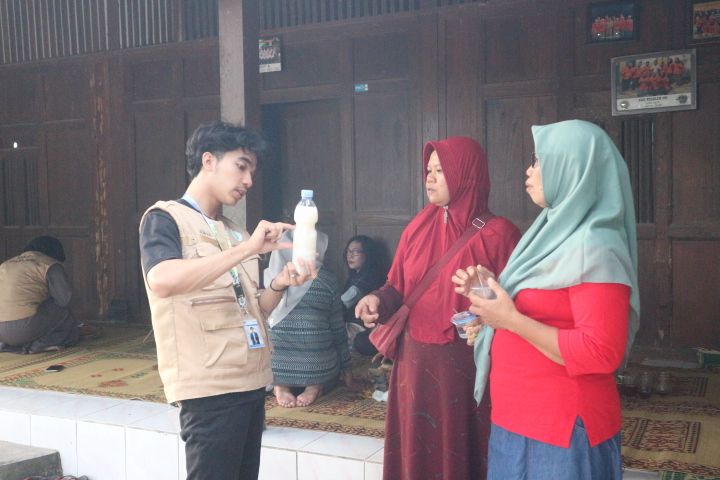
The event, which took place at the Bajang Hamlet Village Hall, was met with enthusiasm from the participants. They came with curiosity to learn how to process stale rice into natural liquid fertilizer. The students began the training by explaining the importance of simple waste management that can be done at home.
After the theoretical session, participants were taught practical methods for making MOL. The ingredients used were very simple: stale rice, rice washing water, and brown sugar. All ingredients were mixed in a closed container and fermented for several days until the MOL was ready for use.
The head of the Bajang Hamlet PKK, Sumarni, was delighted with this new knowledge. According to her, this simple knowledge has a big impact on the environment and households. “It turns out that stale rice, which we usually just throw away, can be processed into liquid fertilizer and natural pesticides that are beneficial for plants,” she said.
The coordinator of Unisa Yogyakarta’s Community Service Program, Faris, explained that this activity is part of the program’s mission in the field of the environment. “We want the PKK women not only to know how to make MOL, but also to get used to using it every day. If this continues to be practiced, it will not only help reduce organic waste, but also save on fertilizer costs,” explained Faris.
With this training, which is supervised by Field Supervisor Sharfina Mutia Syarifah, it is hoped that the Bajang Hamlet community will become more concerned about waste management and environmental conservation. This program is also expected to be the first step towards an environmentally independent village by utilizing local potential.
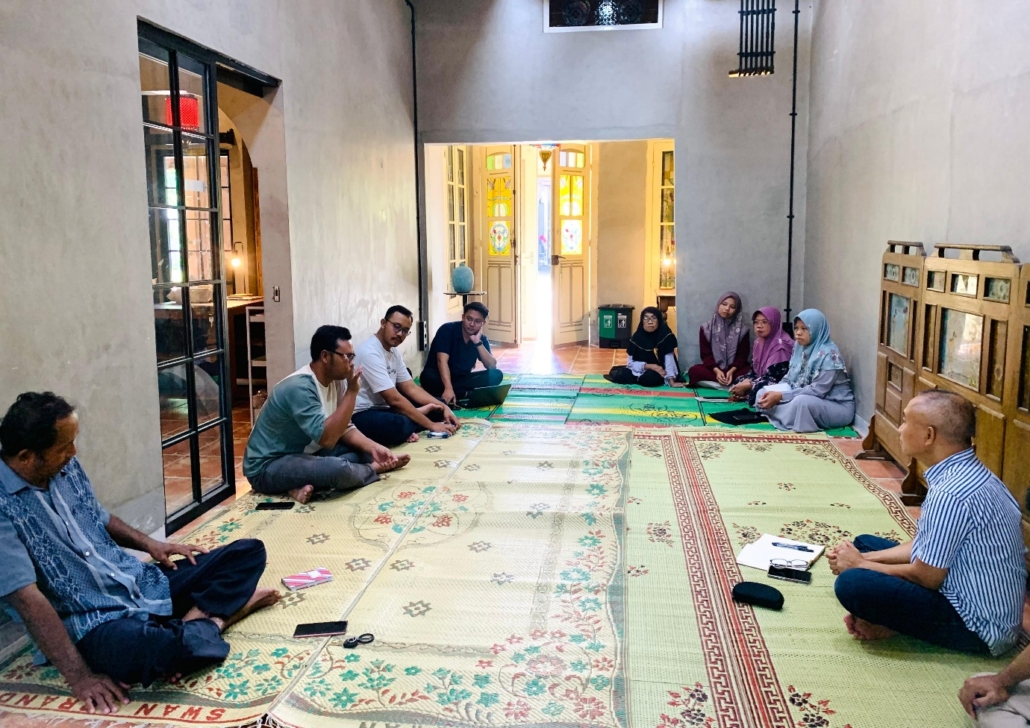
Dukuh Karangrejek, Kahono, expressed his appreciation for the collaboration with UNISA Yogyakarta. “My deepest gratitude goes to the UNISA Yogyakarta Team for their dedication and sacrifice in creating a video that can contribute to the advancement of Karangrejek. Hopefully, it can be an inspiration for all of us,” he said.
Through this program, the community of Karangrejek is expected to become more independent in managing and promoting the village’s tourism potential, thereby achieving sustainable tourism development that benefits all residents.
Universitas ‘Aisyiyah (UNISA) Yogyakarta, through its Public Administration Study Program, is implementing a community service program in Padukuhan Karangrejek, Kalurahan Karangrejek, Kapanewon Wonosari, Gunungkidul Regency. This activity runs from March to July 2025 with the theme “Realizing Sustainable Tourism: Assistance in Developing Community-Based Tourism Promotion in Karangrejek Hamlet.”
The community service team consists of Bhakti Gusti Walinegoro as the chairperson, M. Fajrus Shodiq as a member, and several Public Administration students from UNISA Yogyakarta. This program is funded through a university grant as part of the institution’s commitment to research-based community development and empowerment.
During the activity, the volunteer team focused on forming the Village Media Team and creating promotional videos for tourism. These videos are expected to serve as a means of introducing the tourism potential of Karangrejek more widely, while also increasing active community participation in the management of tourist destinations. The promotional videos can be viewed on all Visit Karangrejek media platforms, from Instagram and TikTok to YouTube.
Visit Karangrejek itself is a local community initiative that manages the village’s tourism potential, ranging from nature tourism, human resources, MSMEs, culture, to public spaces. The existence of Visit Karangrejek has become a driving force in introducing Karangrejek as a community-based tourist destination that prioritizes local wisdom and sustainability.
“This service is based on the challenges faced by Visit Karangrejek managers in developing tourism promotion. These challenges emerged from discussions with the community,” said Bhakti.
He added, “Every stage and decision in this service involves active community participation, from identifying potential, selecting video talent, to scheduling video shoots.”

Certification

Collaboration