Image

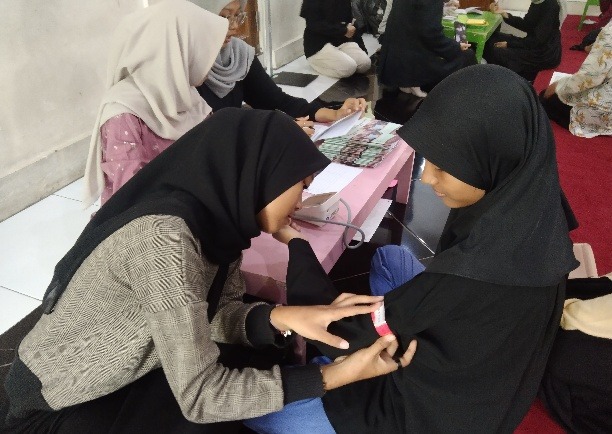
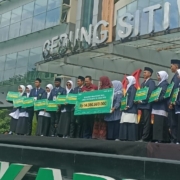
Students from the Community Service Program (KKN) at Universitas ‘Aisyiyah (UNISA) Yogyakarta Group 72 successfully organized a Toddler Health Clinic at PALA 2 RW 2, Notoprajan Village, on Tuesday (8/19/2025). This activity demonstrated positive synergy between students and the community, with 100 percent participation, where all 35 registered toddlers were present.

“Alhamdulillah, 100 percent of the toddlers participated in this posyandu. This is proof of the community’s enthusiasm in maintaining children’s health,” said KKN coordinator Fiqry Alfarabhi, expressing his pride in the residents’ enthusiasm.

Fiqry explained that this program was implemented across disciplines, involving students from the Midwifery, Nursing, Nutrition, and Physiotherapy programs. This collaboration was fully supported by the health post cadres and Ngampilan Community Health Center staff.

The Head of Notoprajan Village, Diah Nur Astuti, S.H., M.Si., appreciated this success. “We hope that the Toddler Health Center can run optimally and consistently achieve the 100% target. The health center is one of the important efforts to ensure that our children are healthy, smart, and ready to face the future,” said Diah.

Kader posyandu RW 2, Kustanti, juga merasa sangat terbantu dengan kehadiran mahasiswa. “Kami sangat terbantu dengan kehadiran adik-adik mahasiswa UNISA Yogyakarta. Kehadiran mereka memberi semangat baru bagi kader dalam melayani masyarakat,” katanya, seraya mengajak para ibu untuk lebih rajin datang ke posyandu setiap bulan.

Dosen Pembimbing Lapangan (DPL), Bdn. Siti Arifah, S.ST., M.H., menegaskan bahwa kegiatan ini adalah wujud nyata pengabdian mahasiswa kepada masyarakat. Menurutnya, melalui posyandu ini, mahasiswa dapat berkontribusi langsung dalam menciptakan generasi bangsa yang sehat, kuat, dan cerdas.

“Program ini tidak hanya ditujukan bagi warga Notoprajan, tetapi juga bisa menjadi contoh baik bagi seluruh masyarakat Yogyakarta,” pungkasnya.

Image
Screenshot 2025 10 21 141615

Financial literacy is now an essential skill, not only for adults but also for children. Recognizing the importance of this, students from the University of ‘Aisyiyah (UNISA) Yogyakarta Group 47 took the initiative to hold an educational activity at Pertiwi 30 Kindergarten, Gedongsari, Wijirejo, Pandak, Bantul. The event, which took place on Thursday (08/21/2025), aimed to instill an understanding of personal finance from an early age.

Field Supervisor (DPL), Bdn. Dwi Ernawati, S.ST., M.Keb., accompanied the students in an activity themed “Storytelling about Financial Literacy and Painting Savings”.

Erna stated that this approach was chosen to make the material easy to understand and enjoyable for the children.

“During the storytelling session, the KKN students introduced basic concepts, such as the difference between needs and wants. They encouraged the children to discuss the importance of prioritizing purchases for needs, like schoolbooks, over mere wants, like new toys,” Erna explained.

Erna added that the students also taught the children how to manage their pocket money using an educational approach. They encouraged the children to divide their pocket money into three categories: spending, saving, and sharing. This concept is expected to instill the habit of budgeting and saving from an early age.

The highlight of this activity is the art of saving. Each child is given a piggy bank, which they decorate themselves. By having a piggy bank, children can see the growth of their savings firsthand, fostering a sense of pride and motivation to continue saving. This program is clear evidence of the contribution of KKN students in shaping a financially literate and responsible generation.

Screenshot 2025 10 21 140747

Students from the Community Service Program (KKN) at Universitas ‘Aisyiyah (UNISA) Yogyakarta Group 43 once again demonstrated their contribution to the community. Through one of their flagship programs, they have been actively implementing LOSIDA (Kitchen Waste Composting) in every neighborhood unit (RT) in the Padukuhan Gesikan IV area, Wijirejo, Pandak, Bantul on Friday (August 22, 2025). This program is designed as a simple and environmentally friendly solution to optimize the management of household organic waste.

The LOSIDA planting activity was carried out in stages, involving all elements of the community, from residents, neighborhood association leaders, to representatives of the PKK (Family Welfare Movement) as the main drivers. The lodong used are PVC pipes planted in the ground, functioning as containers to decompose kitchen waste into natural compost.

The head of KKN Group 43, Muhammad Iqbal, explained that this program is expected to be the answer to the problem of household waste accumulation.

“In addition to reducing waste, the compost from LOSIDA can be used by the community to fertilize plants in their yards,” said Iqbal.

The enthusiasm of the residents in welcoming this program is very high, as evidenced by their active participation in the planting process and their commitment to caring for it. With this simple innovation, UNISA Yogyakarta’s Community Service Program hopes to foster a culture of sustainable and useful waste management in rural areas. This program is clear evidence of the contribution of Community Service Program students in creating positive change in the community.

Screenshot 2025 10 20 164442

Universitas ‘Aisyiyah (UNISA) Yogyakarta held an Employee Gathering on Saturday (23/8) at Joglo Panglipuran, Magelang. The event was attended by all employees, from the Daily Advisory Board (BPH), rectorate leaders, lecturers, to educational staff.

The Employee Gathering was held as an effort to improve communication and coordination among employees, as well as to recharge their energy in facing UNISA Yogyakarta’s work program for 2025-2026.

UNISA Yogyakarta Rector, Dr. Warsiti, S.Kp., M.Kep., Sp.Mat., stated in her opening remarks that this collaborative event is expected to strengthen working relationships, foster synergy, and instill a renewed sense of enthusiasm in carrying out duties.

“This Employee Gathering is not just about togetherness, but a moment to strengthen coordination and communication between all elements at UNISA. With the new spirit that we have built together, I am optimistic that we can successfully carry out the 2025-2026 work program,” said Dr. Warsiti.

During the event, participants took part in various team-building activities, including an outbound program emphasizing teamwork and rafting that tested cohesion while also serving as a refreshing activity. The atmosphere was filled with enthusiasm and camaraderie throughout the entire event, strengthening the bonds between employees outside of their daily work routines.

Through this activity, UNISA Yogyakarta reaffirmed its commitment to continuously strengthen human resources as the key to realizing its vision of a health-oriented, choice-driven, and excellent campus based on progressive Islamic values.

Screenshot 2025 10 16 113434

Yogyakarta, August 20, 2025, A total of 100 students from various student organizations gathered at the UNISA Yogyakarta Basketball Court to participate in a discussion entitled “Youth Leadership: Revitalizing Modern Student Organizations.” The event featured cross-campus panelists: Tiyo Ardianto (President of the Student Executive Board, UGM), Fatur Djaguna (General Coordinator of the DIY Student Executive Board and President of Unjaya), and Lukmannul Hakim (President of UNISA Yogyakarta).

The discussion was dynamic and reflective. In addition to emphasizing the importance of brotherhood and collaboration, the three speakers highlighted the root causes and structural challenges affecting the lives of student organizations today.

Tiyo opened the discussion with a chronological emphasis: according to him, the decline in organizational practices began during the COVID-19 pandemic. “The pandemic forced the postponement or shift of the regeneration process, regular meetings, and other collective practices to the virtual space—and that had a long-term impact on organizational capacity,” he said.

Tiyo added that the continuation of the Merdeka Belajar — Kampus Merdeka (MBKM) policy also had an impact, with academic mobility and the division of time between academic and external activities changing the patterns of student involvement in student organizations. He underlined the need to design flexible working patterns for student organizations while maintaining continuity in regeneration and participation.

Fatur Djaguna continued with a historical perspective. In his brief presentation, Fatur examined the journey of leadership and student movements in Yogyakarta—from the tradition of public dialogue and cross-campus solidarity to the transformation of forms of action that occurred alongside socio-political changes. According to him, understanding the historical traces of the movement is very important for formulating revitalization strategies that do not repeat the failures of the past.

“The history of the movement teaches us about tactics, the ethics of struggle, and the importance of institution building,” he said.

Meanwhile, Lukmannul Hakim highlighted generational issues that are often a source of internal friction. Lukman pointed out the gap between the leadership style of the previous generation—which tends to be hierarchical and based on long experience—and the leadership style of young people, which is more exploratory, digital, and results-oriented.

“This gap is not merely a conflict; it is an opportunity to synthesize experience and innovation. However, without good communication bridges, the gap can divide unity,” he said.

Lukman invited student organizations to formulate knowledge transfer mechanisms that respect both sides: respect for tradition and space for renewal.

The discussion also raised issues of education, economics, socio-politics, and digital media literacy.

The final session closed with the reading of a seven-point statement on Youth Leadership.