

Saving Minor Tubers Through Children’s Snacks: A Smart Move to Preserve Local Genetic Resources
By: Wiwit Probowati, S.Si., M.Biotech., Ph.D
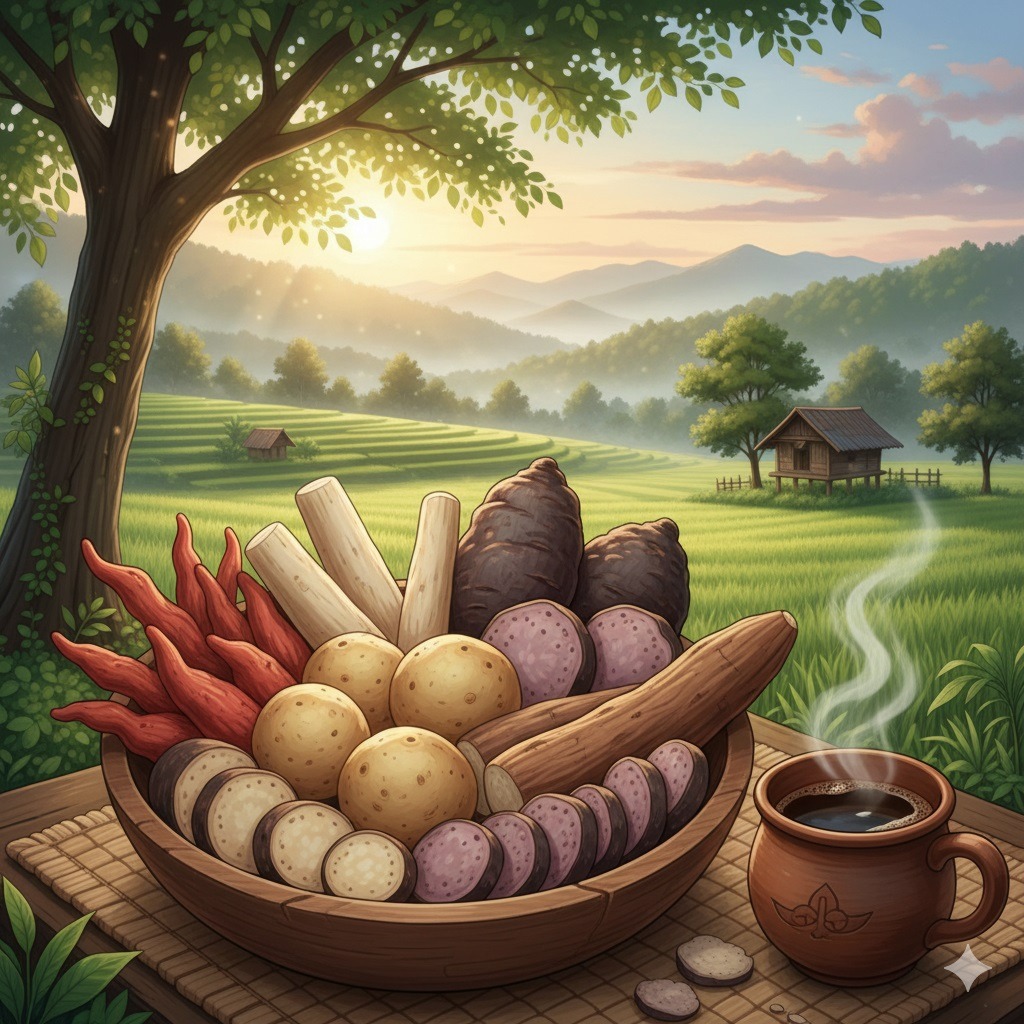
Amidst the onslaught of modern foods made from instant ingredients, local tubers are slowly losing their place, especially among children. Yet, Indonesia possesses an extraordinary wealth of plant genetic resources, including various minor root crops such as ganyong, garut, gembili, gadung, uwi, and suweg. Their existence is now increasingly marginalized, not only because they have lost popularity to fast food, but also due to the lack of adaptive conservation strategies for the modern era.
A fresh idea emerged from the Community Partnership Program, which collaborated with farmers and MSME cake partners (Sameera’s cake and snack) to turn minor tubers into more modern foods. A simple yet visionary idea from Wiwit Probowati, a lecturer in the Biotechnology program at UNISA Yogyakarta, and Silvi Lailatul Mahfida, a lecturer in the Nutrition program at UNISA, collaborated in the Community Partnership Program of the Ministry of Education, Culture, Research, and Technology in September 2025. Through an enjoyable culinary approach, this strategy unites two major objectives—reintroducing the richness of local food to the younger generation while preserving plant genetic resources from the threat of extinction.
Ganyong: The Nutrient-Rich Forgotten Crop
Minor tubers are a group of plants that have received little attention, both in the food system and in agricultural policy. In fact, in addition to their high nutritional value, many of these tubers are able to grow on marginal land, are resistant to climate change, and do not require intensive care. This means that, ecologically and economically, these plants have great potential for development, especially in rural areas such as Sleman.
Unfortunately, the younger generation today is largely unfamiliar with names such as gembili or uwi. They may not even know the taste and benefits of these plants, let alone have seen them. Without active conservation efforts, it is possible that this genetic diversity will be lost, along with its culinary and cultural potential. Previous research conducted by Wiwit Probowati in 2024 found that one of the minor tubers that is abundant in Sleman Regency is the ganyong tuber.
Culinary as a Means of Genetic Preservation
The preservation of genetic resources is not only carried out in laboratories or gene banks. One of the best ways to maintain the existence of plant varieties is to utilize them in everyday life. By making minor tubers part of the daily menu, there will be consistent demand from the market, which will ultimately encourage farmers to continue planting and cultivating them.
This mindset is the strength behind the strategy for MSME partners. When minor tuber-based snacks are developed as MSME products or school activities, the sustainability of these crops is automatically maintained. This is not just a matter of food, but also of preserving the biological and cultural heritage that has existed for hundreds of years.
Challenges and Hopes
Of course, this strategy is not without challenges. There are still many negative perceptions of tubers as “food for villagers” or “food for times of hardship.” In addition, limited supply and processing knowledge are also obstacles to larger-scale production.
However, with strong collaboration between the community, local government, academics, and women’s communities such as ‘Aisyiyah, these challenges can be overcome. Public education needs to be intensified, particularly through school activities, local culinary markets, and social media. The government also needs to provide support through policies that favor the preservation of local crops and technical assistance for MSMEs based on local food.
Snack Menu, Menu of the Future
What Mitra does is not just about providing variety in children’s food. It is a tangible form of local food diversification to achieve food security. Amidst the tide of globalization and commercialization of food, the courage to remain grounded in local wisdom is a revolutionary step.
Through snacks that are child-friendly, healthy, and locally sourced, we are planting the seeds of awareness about the importance of preserving biodiversity, food security, and cultural identity. If today’s children learn to love uwi in the form of donuts, then tomorrow they will become a generation that appreciates biodiversity and takes pride in their nation’s culinary wealth.
This small step could be the snowball of change. Because conservation doesn’t always have to start in a laboratory. Sometimes, it can begin in the home kitchen, at the school cafeteria table, or in the small hands of children enjoying their mothers’ uwi cake.