
Unisa Yogyakarta Emphasizes the Importance of Early Issue Identification in Crisis Management
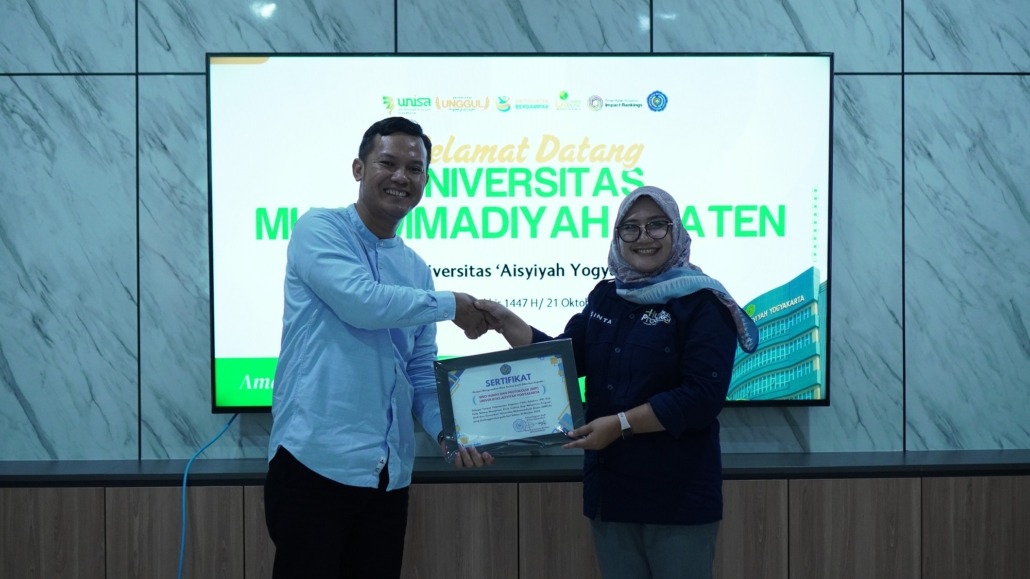
The Head of the Protocol and Public Relations Bureau at Universitas ‘Aisyiyah (Unisa) Yogyakarta, Sinta Maharani, emphasized the importance of sensitivity to issues before a crisis occurs within an institution. According to her, crises can arise quickly, especially in the era of social media, where everything goes viral.
“Before a crisis, there are always issues that must be identified. Sometimes not everyone realizes this, considering it to be just rumors. However, if we are not sensitive and ignore it, it can become a crisis,” said Sinta during a visit by the Communication Studies Program of Muhammadiyah University Klaten to Unisa Yogyakarta on Tuesday (10/21/2025).
Sinta explained that issue and crisis management at Unisa involves both internal and external stakeholders. One of the steps taken is a public hearing with students, which serves as a platform to directly hear the aspirations and expectations of the academic community.
“Gen Z characters respond quickly to stimuli, so we must be smart in identifying them. During public hearings, we invite campus leaders to show our focus on addressing issues early on,” he explained.
Additionally, Unisa Yogyakarta utilizes various digital channels to gather public feedback, ranging from the ‘Help Us Improve’ feature via QR codes located around campus, social media channels like Instagram, to the feedback and suggestion section on the official website. Every month, the Public Relations team collaborates with relevant units to follow up on the feedback received.
“If an issue is not identified, it could become a runaway problem. Therefore, we ensure there is communication and follow-up with technical units. There is a deadline for this,” added Sinta.
On this occasion, Sinta also shared a number of real experiences in dealing with crises that Unisa Yogyakarta had experienced. In several crises faced, Unisa Yogyakarta went through three stages. First, Pre-Crisis, which is planning and preparation in case of a crisis, including training and simulations. Then, during the crisis, which is crisis management and evaluation. After the crisis, one of the things done is monitoring.
Dani Kurniawan, Head of the Communication Studies Program at Muhammadiyah University of Klaten, stated that this activity provides students with hands-on experience in understanding public relations practices in the real world.
“Our course includes crisis management. In the CPMK program, there is a section on how to manage a crisis within an institution. We conducted this PR visit because we observed that Unisa Yogyakarta has faced several crises and recovered quickly,” explained Dani.