Islamic campuses need to make a holistic or comprehensive policy in building the spiritual welfare of non-Muslim students on Islamic campuses. This holistic policy starts from building an authentic tolerance paradigm for the Islamic Campus Academic Community. When a holistic policy is implemented, it is expected to build the welfare values of non-Muslim students on Islamic campuses.
Islamic campuses that accept non-Muslim students have dynamic challenges. Of course, there are many positive values obtained when accepting non-Muslim students. For example, campuses that are in demand by non-Muslim students are campuses that have superior quality.
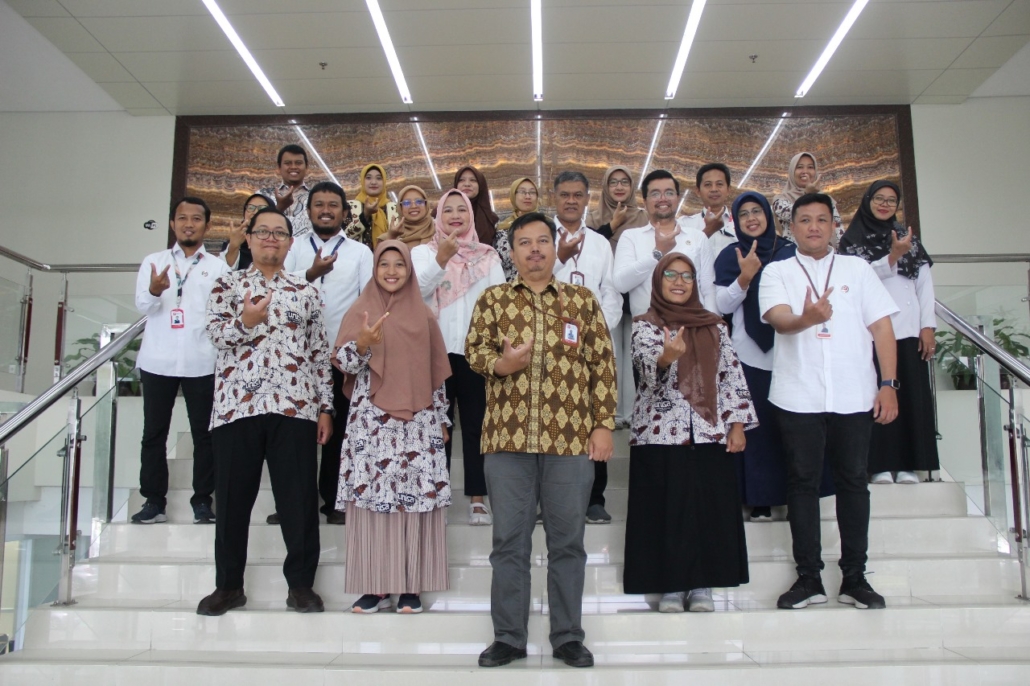
This is an excerpt from the conclusion of the dissertation presentation in the Doctoral Promotion Session on behalf of Iwan Setiawan. In the agenda held on Friday, July 19, 2024, Iwan Setiawan defended his dissertation entitled The Experience of Fulfilling the Spiritual Welfare of Non-Muslim Students at an Islamic Campus in Yogyakarta.
The research for this doctoral degree is the anxiety of Iwan Setiawan, a lecturer in Al Islam at Aisyiyah University (UNISA) Yogyakarta and Deputy Chairperson of the Muhammadiyah Yogyakarta Regional Leadership. This research wants to answer several questions related to non-Muslim students who study at Islamic campuses. Namely why Non-Muslim students choose to study at an Islamic Campus, how the practice of tolerance of Muslim and Non-Muslim students and how the experience of students in fulfilling their spiritual welfare needs.
Iwan Setiawan sees that Non-Muslim students studying at the Islamic Campus in Yogyakarta, if the rights of this spiritual welfare are fulfilled, will lead to happiness and positive values from students when they become students at the Islamic Campus.
The dissertation promotion session was chaired by Zuly Qodir as Deputy Director of Postgraduate UMY and Syifa Amin Widigdo as Head of the Islamic Education Psychology Doctoral Program. The dissertation examiners were Muhammad Azhar, Akif Khilmiyah, Syafri Sairin, Abd Majid, Khoiruddin Bashori and Sutrisno.
Attending the doctoral promotion session were Warsiti, Rector of Aisyiyah University Yogyakarta, Muhammad Ikhwan Ahada, Chairman of the Muhammadiyah Yogyakarta Regional Leadership and members of the DIY PWM, Muhammadiyah Youth Autonomous Organizations, the extended family of Bani Padmowiharjo, the extended family of Bani Hisyam and Iwan Setiawan’s colleagues.
In this Doctoral Promotion Session Iwan Setiawan passed and was entitled to wear a doctoral bracelet and became the 143rd doctor to be graduated by Universitas Muhammadiyah Yogyakarta.
https://www.unisayogya.ac.id/en/wp-content/uploads/sites/16/2024/07/Psikologi-Pendidikan-Islam.jpg9871600adminhttps://media.unisayogya.ac.id/wp-content/uploads/2024/01/Logo-Unisa_Horisontal_bg_putih.pngadmin2024-07-27 09:25:292025-01-16 11:12:28Graduated from Islamic Educational Psychology Doctoral Program by Researching Non-Muslim Students at an Islamic Campus
Psychoeducation of Psychology Study Program of the Faculty of Economics, Social Sciences and Humanities (FEISHum) Universitas `Aisyiyah (UNISA) Yogyakarta to one of the partners from the orphanage, and the orphanage in question is the Giwangan Islamic Princess Orphanage.
Psychology Unisa Yogyakarta deployed a number of students, namely Kania Sabilla and Laelly Dewi Sekar Tanjung, who were selected by rigorous filing and selection to be able to carry out the MBKM humanitarian project at the Giwangan Islamic Orphanage.
Students who are deployed, have a supervisor, Mustaqim Setyo A. S.Psi, M.Psi. who is also a lecturer in statistics courses at Psychology Unisa Yogyakarta.
This activity aims to understand and help children recognize the various types of emotions they feel, such as anger, sadness, pleasure, and fear and provide teaching for children how to manage and express their emotions in a healthy and adaptive way.
This activity is carried out after the children have completed the mandatory activities at the orphanage, this activity begins by providing material about the importance of recognizing emotions in children, such as what emotions are, what are the types and how to deal with these emotions.
Furthermore, children are given worksheets on recognizing emotions such as how to express when we are angry, happy, sad, and afraid. Then the children were given an expression guessing game by UNISA Yogyakarta students.
Psychoeducation is expected to help children develop better social skills, such as empathy, tolerance, and communication skills. This activity went well and smoothly because the participants were very enthusiastic and eager to do this activity. This activity provides many benefits for the growth of children in orphanages, and children are able to place emotions at certain times.
https://www.unisayogya.ac.id/en/wp-content/uploads/sites/16/2024/07/Psikoedukasi.jpg7561008adminhttps://media.unisayogya.ac.id/wp-content/uploads/2024/01/Logo-Unisa_Horisontal_bg_putih.pngadmin2024-07-26 14:05:052025-01-16 11:13:45Psychoeducation On Emotion Recognition and Regulation For Children In Orphanages
In line with the vision of Universitas ‘Aisyiyah Yogyakarta (Unisa Yogya) to become a health-oriented campus of choice and excellence based on progressive Islamic values, Unisa Yogya Laboratory donated a number of microscopes to Madrasah Muallimin Muhammadiyah Yogyakarta and Muhammadiyah 2 Junior High School (SMP) Bambang Lipuro Bantul Yogyakarta.
The microscope grant was carried out on Tuesday, July 23, 2024 / 17 Muharram 1446 H, at the Siti Bariyah Building Laboratory Unit of Unisa Yogya, which was attended by the Head of the Unisa Yogya Laboratory Unit Dr. Dhesi Ari Astuti, S.Si.T., M.Kes. as a representative of Unisa Yogya, Mrs. Dania Rithma Danthi Iriyani, S.Si. as a Natural Science Teacher, and Madrasah Muallimin Muhammadiyah Yogyakarta represented by Ustadz Agus Salim, S.H.I., M.S.I. as Head of Madrasah Muallimin Muhammadiyah Yogyakarta Laboratory.
Microscope is a laboratory tool used to observe very small objects and objects that are not visible to the sense of sight directly. This tool is commonly used by students of the Faculty of Health Sciences in practicum learning in the biomedical laboratory at Unisa Yogya.
Unisa Yogya is present as a higher education institution that is committed to making a positive contribution to the development of science and society, especially in the ‘Aisyiyah Muhammadiyah charity.
Dhesi hopes that this donated microscope tool can still be used properly by Madrasah or High School, this tool grant is carried out as a form of Unisa Yogya’s support in producing superior future generations, with the first step of introducing microscopes to high school students, as well as to support science subjects. In addition, Dhesi is also very open if madrasah or high school students will conduct comparative studies, as has been done by Madrasah Muallimin Muhammadiyah Yogyakarta in June 2024.
https://www.unisayogya.ac.id/en/wp-content/uploads/sites/16/2024/07/Laboratorium-UNISA.jpg347462adminhttps://media.unisayogya.ac.id/wp-content/uploads/2024/01/Logo-Unisa_Horisontal_bg_putih.pngadmin2024-07-26 09:40:062025-01-16 11:15:31UNISA Yogyakarta Laboratory Donates Microscopes to Junior High School Students In Yogyakarta
The Center for Women, Family and Disaster Studies (PSPKB) of Universitas `Aisyiyah (UNISA) Yogyakarta held a Focus Group Discussion (FGD) themed “Research Topics on Women and Family in Disaster”. The event presented Rahmawati Husein, MCP, Ph.D, as a resource person and took place in the Siti Walidah building, Thursday (25/07).
Dr. Mamnu’ah, S.Kep., Ns.M.Kep., Sp.Kep.J, Chairperson of UNISA Yogyakarta’s PSPKB, in her speech explained that the purpose of this FGD was to discuss research topics related to women and families in disaster areas.
“In addition, this activity aims to formulate research topics that are in accordance with the PSPKB research roadmap, which is to become a reference center for disaster management in women and families,” said Mamnu’ah.
Vice Rector IV of UNISA Yogyakarta, M. Ali Imron, M.Fis, added that UNISA’s PSPKB has a long history in developing disaster research since UNISA was still a STIKES.
“This meeting is the beginning of how we will strive together so that PSPKB will increasingly exist in research development,” said Imron.
In her presentation, Rahmawati Husein highlighted the importance of providing input to the government and the association in disaster management. She also emphasized that disasters and climate change are national research priorities of the National Research and Innovation Agency (BRIN).
This FGD activity is expected to strengthen the role of UNISA’s PSPKB in disaster management and research, as well as become the main reference in disaster-related research topics.
https://www.unisayogya.ac.id/en/wp-content/uploads/sites/16/2024/07/perempuan-dan-keluarga-2.jpg8671156adminhttps://media.unisayogya.ac.id/wp-content/uploads/2024/01/Logo-Unisa_Horisontal_bg_putih.pngadmin2024-07-25 14:57:042025-01-16 11:17:45UNISA’s PSPKB Yogyakarta Holds FGD to Discuss Research on Women and Families In Disasters
Bantul Health Office (Dinkes) officially held Polio National Immunization Week (PIN) immunization for 0-7 years with an estimated target of 104,000 children, Wednesday (23/07).
Lecturers and students of the Faculty of Health Sciences (FIKes) Universitas `Aisyiyah (UNISA) Yogyakarta participated in the PIN activities held by the Bantul Health Office, it is hoped that with the immunization of Polio PIN, the transmission of the polio virus can be interrupted and also prevent children from a number of diseases that can be prevented through immunization.
Head of Bantul Health Office Agus Tri Widiyantara said the first phase of immunization for 0-7 years old was held from Wednesday (23/7/2024) to Monday (29/7/2024). Meanwhile, the sweeping will be held from July 30, 2024 to August 3, 2024.
After that, the second round of polio vaccination will start from August 6, 2024 to August 12, 2024. For sweeping PIN Polio will be held on August 13, 2024 until August 17, 2024. Polio immunization for 0-7 years is free of charge.
For the immunization implementation location, said Agus, the Polio PIN was held at Posyandu, Polindes, Poskesdes, Puskesmas, Puskesmas pembantu, private clinics and hospitals.
“As well as other immunization service posts under the coordination of Bantul Health Office,” said Agus.
Vice Regent of Bantul Joko Purnomo appreciated the high interest of the people who participated in the immunization of Polio PIN for 0-7 years.
In addition, he also saw that the Polio National Immunization Week was also fully supported by a number of parties both from Posyandu cadres and universities.
“We hope that the immunization can increase immunity and prevent children from the transmission of the Polio virus and a number of other diseases,” said Joko.